



Following the exhibitions Les Choses – A History of Still Life in 2022–23, The Treasury of Notre-Dame de Paris in 2023–24, and Figures of the fool in 2024–25, the Fondation Etrillard is renewing its support for the musée du Louvre with a unique retrospective: "Martin Schongauer. The beautiful immortal", on display from 8 April to 20 July 2026 in the Mezzanine Napoléon.
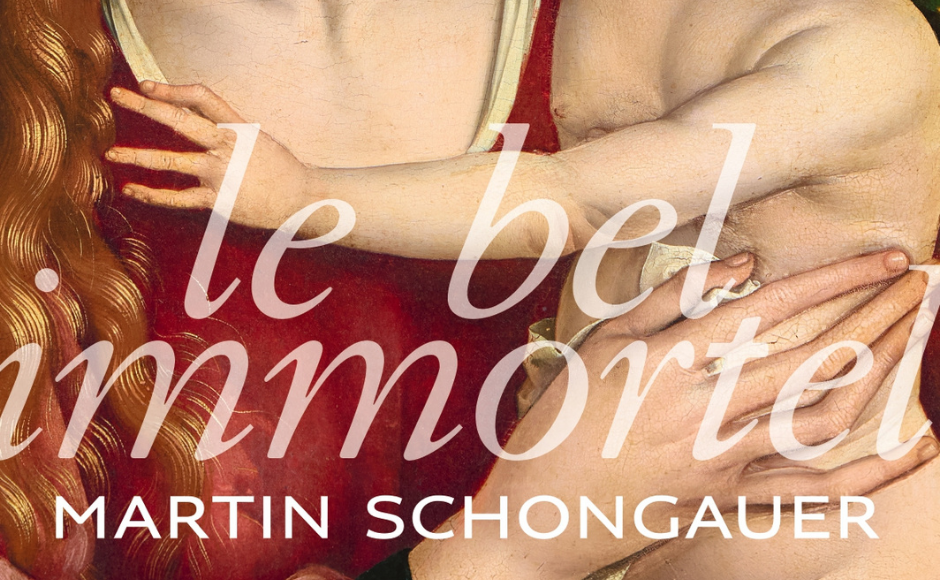
Referred to as ‘the Handsome Martin’ by his contemporaries, including Albrecht Dürer, who highly regarded him, Martin Schongauer is one of the most popular Germanic artists of the late Middle Ages. Son of a goldsmith, he was born in Colmar around 1445. A renowned painter, he is principally famous for his engravings, which were widely circulated throughout Europe and served as models and sources of inspiration for generations of artists. His decisive influence remains largely unknown to the general public even today. He died of the plague in 1491, leaving behind many mysteries surrounding his life and personality, but above all an undeniable influence on artists of the late Middle Ages and the Renaissance.
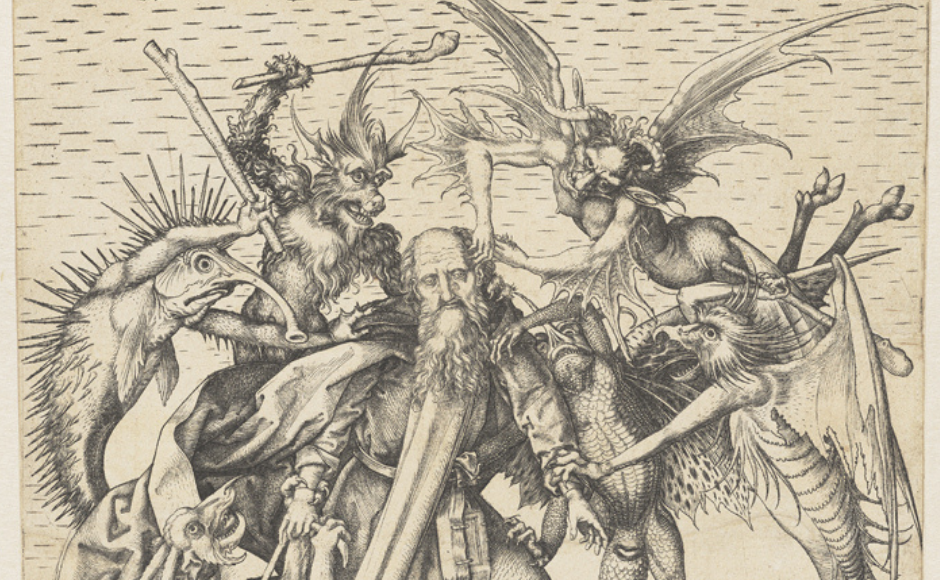
Martin Schongauer, Saint Anthony Tormented by Demons. Between 1469 and 1473. Engraving. H. 30.8; W. 22.8 cm. Paris, Louvre Museum, Department of Graphic Arts, Edmond de Rothschild Collection © GrandPalaisRmn (musée du Louvre) / Gabriel De Carvalho
For the first time, almost all of Martin Schongauer’s paintings are on display, including “The Virgin of the Rose Bush”, the artist’s masterpiece and the only dated panel painting. Of very large dimensions (200 x 114.5 cm), although it appears that it was originally even larger, the work is on permanent display at the Dominican Church in Colmar. Its presentation at the Louvre as part of an exhibition is exceptional. In addition to the artist’s altarpieces and panel paintings, the exhibition features a vast selection of prints and rare drawings. A truly remarkable collection that traces the life and work of one of the great masters of the 15th century.
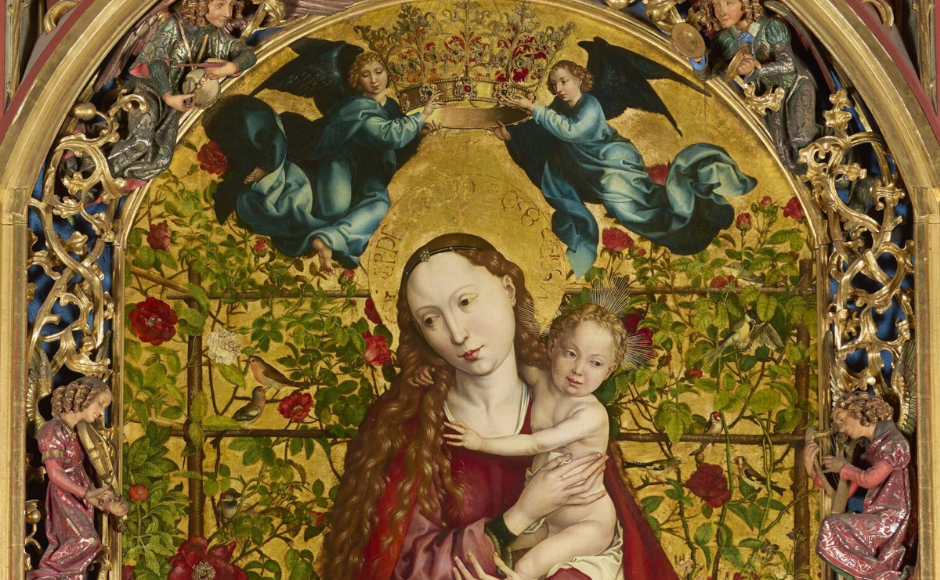
Martin Schongauer, The Virgin of the Rose Bush, 1473. Dated 1473 on the reverse. Oil and tempera on softwood, H. 200.2; W. 114.4; Depth 2.9 cm. Colmar, Dominican Church © Grand Est Region – General Inventory / Bastien Garnier, courtesy of the Parish Council of the Collegiate Church of Saint-Martin in Colmar
While the first part of the exhibition focuses on the figure of Martin Schongauer, the second explores the extent of his artistic influence across Europe. Through various works dating from the 15th to the 17th centuries and originating from Bohemia, Italy, Spain, and France, the influence of the German artist’s drawings and models extends to all forms of art, from painting to goldsmithing, sculpture, and enamelwork. A cultured artist with a charming and ingenious style, and a true virtuoso of the engraving tool, Martin Schongauer left a profound mark on European visual culture, transcending physical and temporal boundaries, thereby elevating him to the rank of an “immortal” artist.
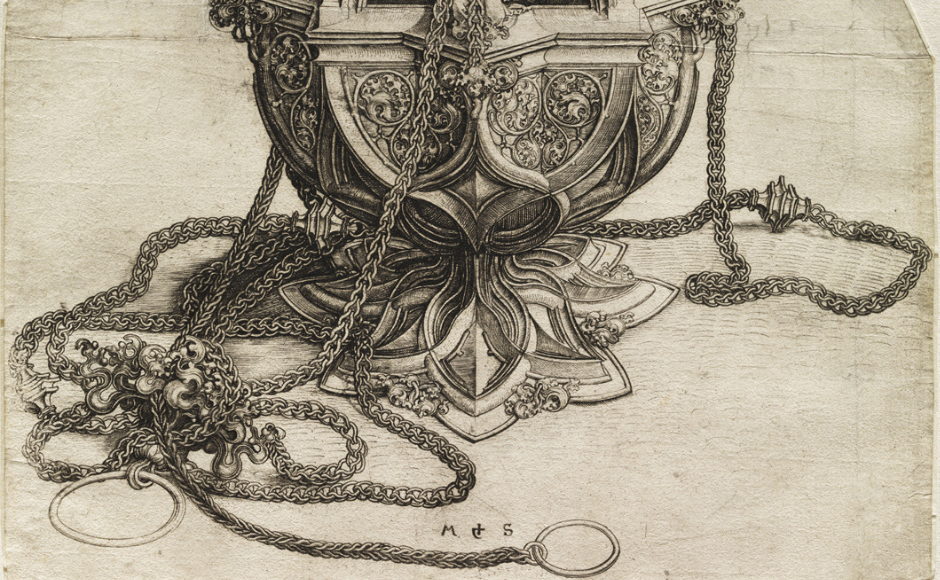
Martin Schongauer, The Incense Burner. Circa 1470–1475. Engraving, upper corners chipped. H. 26; W. 20.6 cm (at the bottom). Paris, Musée du Louvre, Department of Graphic Arts, Edmond de Rothschild Collection © GrandPalaisRmn (musée du Louvre) / Philippe Fuzeau