
Prix Nature dans la ville




Evolution of the Award
After four editions of the Natural Heritage Prize, the Fondation Etrillard is repositioning this distinction, which is now becoming the “Nature in the City” Award. This transformation reflects the Foundation’s desire to further affirm its commitment to providing access for all to nature in their local area, while responding to the growing challenges of urban densification.
Objectives and challenges
In a context where cities must reconcile quality of life, environmental resilience and the preservation of living organisms, the development of new green spaces is a major imperative. The “Nature in the City” Award aims to support and promote exemplary landscaping projects that can sustainably enrich urban biodiversity in Switzerland and France.
Prize and support
With prize of CHF 30,000, the award enables the Fondation Etrillard to support the transformation of a site committed to biodiversity, improving the urban environment and raising public awareness of nature conservation each year.
Press contact:
Sandra Laberenne, press officer
+33 6 43 19 13 88
slaberenne@meiji-communication.com
Ambre Oggier, communications officer at the Fondation Etrillard
+ 41 22 318 59 50
ambre.oggier@fondationetrillard.com
Eligible projects
The Award is open to any urban green space open to the public, whether it is a public or private initiative: parks or gardens, urban vegetable gardens or orchards, promenades or landscaped riverbanks – or any development that promotes the presence of living things in the heart of the city, in Switzerland or France.
Selection process
Applications are subject to a technical evaluation conducted by the Fondation Etrillard, in collaboration with Plante & Cité (Switzerland and France). Following this analysis and the selection of the finalist projects, a jury composed of qualified individuals in the fields of the environment, urban ecology and land use planning will select the winner.
Application schedule
Applications will be open to project leaders from Tuesday 6 January to Friday 10 April 2026
The prize is open to projects in France and Switzerland. Der Preis steht Projekten in Frankreich und der Schweiz offen. Il premio è aperto a progetti in Francia e Svizzera.
For Swiss applicants who do not speak French, the rules are available:
Für Schweizer Bewerber, die kein Französisch sprechen, sind die Regeln verfügbar:
Per i candidati svizzeri che non parlano francese, le regole sono disponibili:
– in German at this link / auf Deutsch unter diesem Link
– in Italian at this link / in italiano a questo link
The online application form must be completed in French or English. Das Online-Bewerbungsformular muss auf Französisch oder Englisch ausgefüllt werden. Il modulo di domanda online deve essere compilato in francese o in inglese.
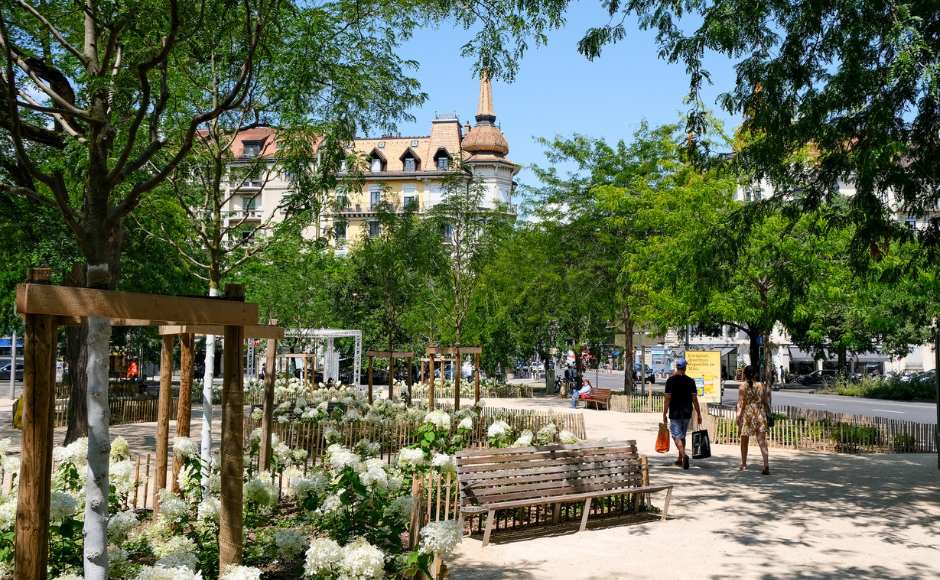
Place du Pré-l’Evêque © Ville de Genève / Lionel Devaux
After four editions of the Natural Heritage Prize from 2020 to 2024, why did the Foundation decide to focus the award on Nature in the city?
“The theme of Nature in the city seemed obvious to us after a year of reflection following the fourth edition of our Natural Heritage Prize. We wanted to refine the theme of the award in order to improve its impact. We wanted to get as close as possible to current needs and provide concrete solutions. After an in-depth study of the existing situation with the help of Plante & Cité Switzerland and France, it became clear to us that there is little financial support available for the renaturation of our cities.
Yet this is now a crucial social issue, both for public health and for the environment. More than 75% of the Swiss and French populations live in urban areas, in cities that were not designed to adapt to climate change. However, one of the most effective and accessible solutions for improving our living environment is to increase the presence of nature in cities. In particular, this can lower perceived temperatures by nearly 10°C during heat waves and reduce cardiovascular and respiratory risks.
With this specific project focus, the Foundation aims to have a more direct impact on increasing the presence of nature in everyone’s daily lives and to help demonstrate its benefits, thereby contributing to environmental protection.”
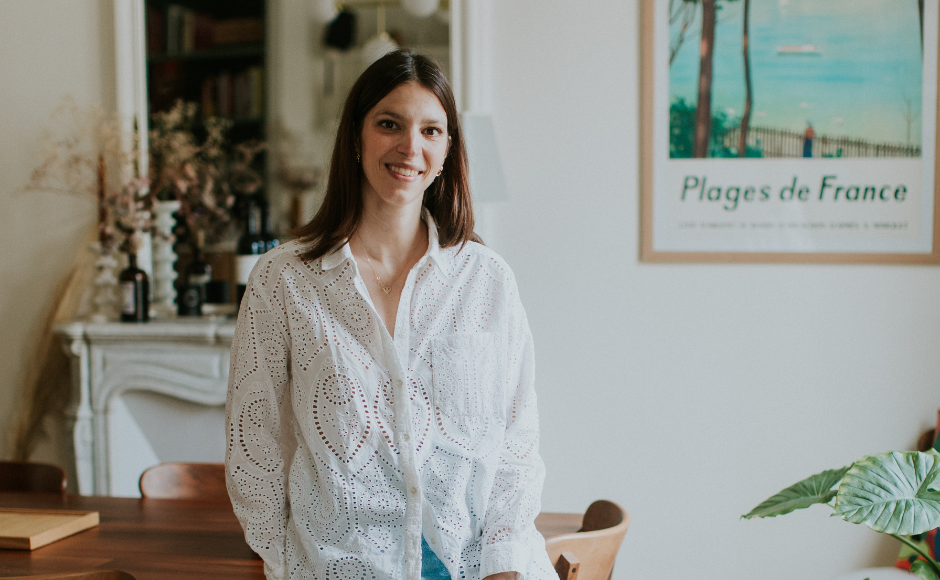
Églantine Petit, membre du conseil de la Fondation Etrillard © Camille Marciano
How did you develop this new award?
“We worked with Plante & Cité Switzerland and France, first on an assessment of the existing situation, as mentioned, and then on developing our rules and application process. We conceived this award as an extension of what we were doing before, but with a more focused theme, while seeking to better measure the impact of the proposed projects. Our work consisted of developing indicators to measure the impact of a project before and after its implementation, based on our three pillars: the well-being of residents, the transformation of the location and the project’s contribution to life.
We then surrounded ourselves with experts for our jury, in order to bring a vision that goes beyond the technical and practical evaluation that the Foundation and Plante & Cité will provide. We are honoured that such experts have agreed to join the Nature in the City Award: Gaëlle Aggeri (ENSP Versailles), Laurence Baudelet (Graine de jardins), Sylvain Greutert (City of Geneva) and Nathalie Machon (National Museum of Natural History in France). We look forward to discovering the candidate projects and hope to organise an event to announce our winner during the ‘Rendez-vous aux jardins’ in June 2026.”
Why do you think this Nature in the City Award is necessary?
“The benefits of nature in cities are well established. However, in large urban centres, one in two residents does not have access to a public green space within a five-minute walk of their home (INSEE, 2025). By promoting urban landscaping with nature at its heart, the Nature in the City Award is part of a drive to reduce inequalities in access to nature.”
What issues does the Nature in the City Award address?
“The Award aims to address three major issues: enabling city dwellers to experience nature on a daily basis, transforming a place by giving it a new purpose, and finally, welcoming living organisms and offering nature-based solutions to climate change.”
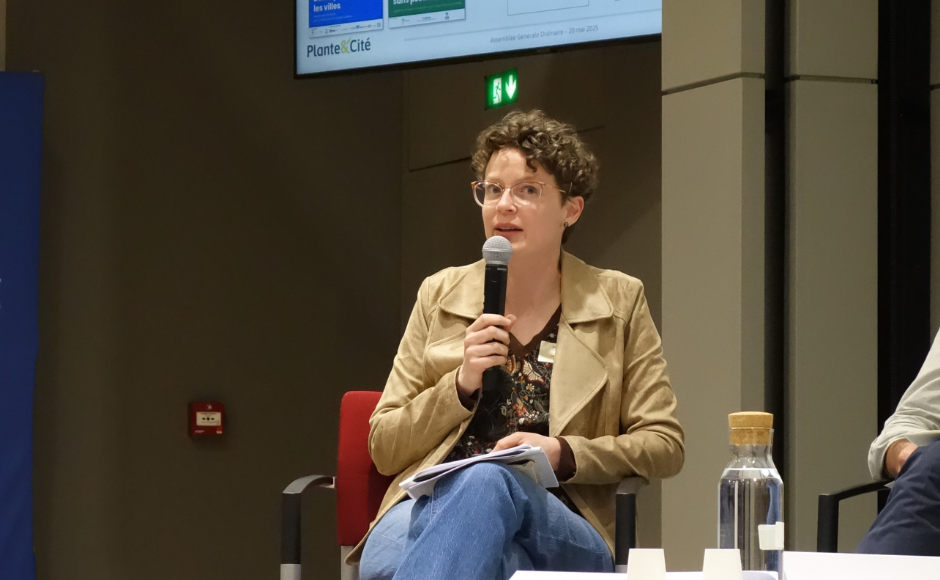
Caroline Gutleben, directrice de Plante & Cité